
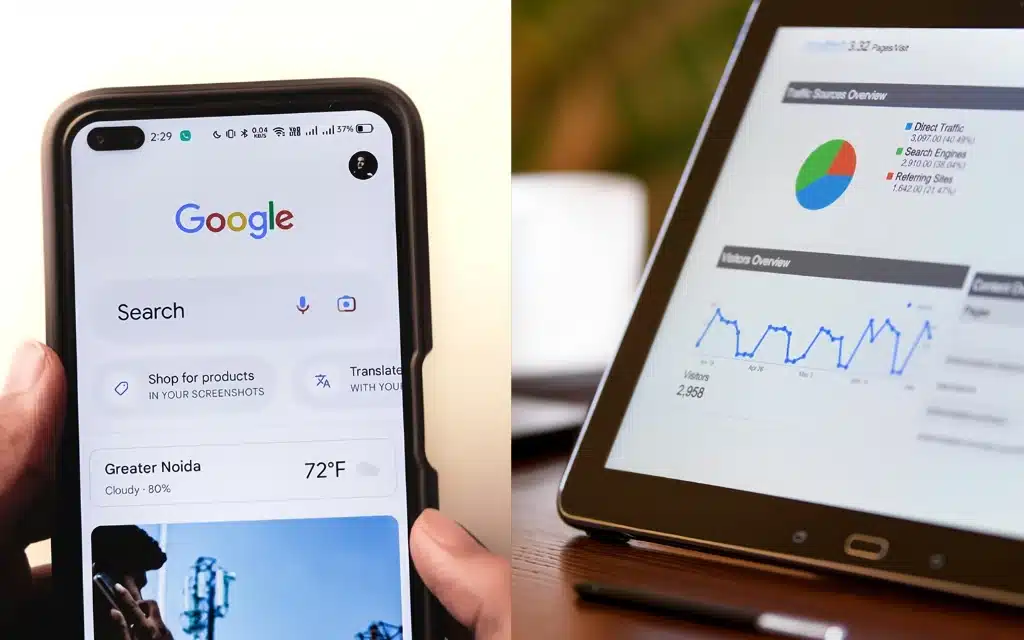
What SEO Actually Does
Search Engine Optimization is the process of improving your website and online presence so you rank higher in Google’s organic (unpaid) results and the local Map Pack.
How it works:
You optimize your website content, build your Google Business Profile, earn citations and backlinks, and create city-specific content so Google understands your business as the most relevant and authoritative result for searches in your service area.
Timeline:
Generally, SEO typically takes 3 to 6 months to show measurable results and 6 to 12 months to reach full performance. It is a long-term strategy, not an instant channel.
Cost structure:
In most cases, SEO is billed as a monthly retainer with an agency or specialist. Monthly investment varies based on your market, competition, and campaign goals.
If you pause your SEO efforts, your existing rankings and authority won’t disappear overnight. However, without ongoing optimization, content updates, and technical maintenance, growth will slow and rankings may gradually decline over time.
What you get:
- Organic rankings in Google’s main search results
- Map Pack visibility for local intent searches
- Compounding traffic that increases over time
- Lower cost per lead as performance improves
- Long-term brand authority and search presence
What Google Ads Actually Does
Google Ads (formerly AdWords) places your business at the top of search results through paid placement. You bid on keywords, and when someone searches those keywords, your ad appears above the organic results. How it works: First, you create ads, choose keywords, set geographic targeting (e.g., DFW metro), set a daily budget, and pay each time someone clicks your ad. Google’s algorithm determines ad position based on your bid, ad quality, and expected click-through rate. Timeline: By comparison, Google Ads can generate leads within 24 hours of launching a campaign. This is the fastest path to search visibility. Cost structure: You pay per click (PPC). Costs vary by industry and keyword competition. Here’s what DFW businesses typically pay:| Industry | Avg. Cost Per Click (DFW) | Avg. Cost Per Lead |
|---|---|---|
| HVAC | a custom amount – a custom amount | a custom amount – a custom amount |
| Plumbing | a custom amount – a custom amount | a custom amount – a custom amount |
| Dental | a custom amount – a custom amount | a custom amount – a custom amount |
| Personal Injury Law | a custom amount – higher investment | a custom amount – a custom amount |
| Home Remodeling | a custom amount – a custom amount | a custom amount – a custom amount |
| Roofing | a custom amount – a custom amount | a custom amount – a custom amount |
-
Immediate visibility at the top of search results
- Precise control over budget, targeting, and timing
- Measurable cost per lead from day one
- Ability to turn on/off based on capacity
- Quick testing of new markets or services
The Real Cost Comparison
To see the difference in action, imagine a plumbing company in Plano that wants to generate 30 new customer inquiries each month.
Google Ads Example
- Target keywords: “plumber Plano,” “emergency plumber near me,” “drain cleaning Plano”
- Average CPC: a custom amount
- Conversion rate: 8% (industry average for local services)
- Clicks needed: 375
- Monthly ad spend: a custom amount
- Management fee: a custom amount – a custom amount
- Total monthly cost: ~a custom amount – a custom amount
- Cost per lead: ~a custom amount
SEO Example (Month 8)
- Monthly SEO investment: a custom amount
- Organic traffic: 1,500 visits per month
- Conversion rate: 3%
- Estimated leads: 45
- Total monthly cost: a custom amount
- Cost per lead: ~a custom amount
Over time, SEO becomes increasingly cost effective because traffic and rankings continue to build. In contrast, PPC costs generally remain consistent and may even increase as keyword competition grows. Across many service industries, Google Ads cost per click has continued to rise year after year.
It’s also important to understand the timing. SEO won’t produce 45 leads during the first month. Instead, it may only generate a handful of inquiries while your website gains authority. Google Ads helps bridge that gap by delivering immediate visibility while your SEO campaign builds momentum.
When SEO Is the Better Investment
Long-term growth is your priority. If your business will be operating for years to come and you plan to keep generating customers online, SEO typically delivers the highest return on investment over the long term.
High customer lifetime value makes SEO even more valuable. Whether you’re a personal injury attorney, dentist, or HVAC contractor, acquiring a single customer can generate thousands of dollars in revenue. As organic visibility grows, the long-term return from SEO compounds over time.
Businesses serving multiple cities benefit the most. A DFW company that serves Plano, Frisco, McKinney, Richardson, and Allen can rank in each market through city-specific SEO pages. As a result, your business can generate organic traffic from multiple service areas. Achieving the same reach with Google Ads requires paying for clicks in every location.
Competitive markets make SEO essential. If your competitors already occupy the top organic positions, choosing not to invest in SEO means leaving a significant share of search traffic on the table. In addition, organic listings consistently receive more clicks than paid ads.
Reducing reliance on paid advertising is another advantage. Many DFW businesses begin with Google Ads but discover their lead flow stops the moment the budget is paused. By comparison, SEO creates a sustainable source of traffic and leads that helps reduce dependence on paid campaigns.
When Google Ads Is the Better Investment
If your business needs leads immediately, Google Ads is often the best choice. New businesses, newly launched services, or companies facing cash flow challenges can begin generating inquiries within days.
Another advantage of Google Ads is its ability to capitalize on seasonal demand. For example, an HVAC company entering a Dallas summer can’t afford to wait six months for SEO to gain traction. Instead, paid search captures the surge in searches like “AC repair near me.”
Google Ads is also an excellent way to test a new market. Before investing in long-term SEO for a new city or service, you can run campaigns for 60 days to measure demand, lead quality, and conversion rates. As a result, those insights help shape a more effective SEO strategy.
In highly competitive industries, paid advertising can provide visibility while your SEO campaign builds authority. This is especially true for searches such as “personal injury lawyer Dallas,” where established firms often dominate the organic rankings.
Budget flexibility is another major benefit. You can increase spending during busy seasons, reduce it when demand slows, or pause campaigns entirely if your schedule is full. Meanwhile, SEO is designed to deliver a steadier stream of long-term traffic.
Finally, Google Ads offers precise geographic targeting. Campaigns can focus on specific ZIP codes, neighborhoods, or service areas, whereas SEO generally targets broader city or regional searches.
When to Use Both (Most DFW Service Businesses)
For most local service businesses in Dallas-Fort Worth, the most effective strategy isn’t choosing between SEO and Google Ads. Instead, it’s using both together to generate immediate leads while building long-term organic growth. Google Ads helps your business attract customers right away. At the same time, SEO strengthens your online presence, increases organic visibility, and reduces your reliance on paid advertising over time. The recommended approach:Phase 1: Launch with Google Ads (Months 1–3)
Start with Google Ads to generate leads while your SEO campaign is being built. In addition, the data from your PPC campaigns can help identify the keywords and services that convert best.Phase 2: Build SEO While Ads Continue (Months 3–6)
As your SEO strategy gains traction, continue running Google Ads to maintain a steady flow of leads. Meanwhile, monitor your combined cost per lead to understand how both channels are performing together.Phase 3: Shift Budget as SEO Grows (Months 6–12)
Once your organic rankings begin generating consistent traffic, gradually reduce ad spend on keywords where you’re already ranking well. Instead, reinvest that budget into new services, locations, or highly competitive search terms.Phase 4: Optimize Your Marketing Mix (Ongoing)
Over time, use Google Ads strategically for seasonal promotions, new service launches, and competitive keywords. Meanwhile, let SEO provide a dependable stream of long-term organic traffic and qualified leads. The compounding effect looks like this:The compounding effect in action:
| Month | SEO Leads | Ad Leads | Total Leads | Total Monthly Cost | Cost Per Lead |
|---|---|---|---|---|---|
| 1 | 0 | 20 | 20 | a custom amount | a custom amount |
| 3 | 5 | 20 | 25 | a custom amount | a custom amount |
| 6 | 15 | 20 | 35 | a custom amount | a custom amount |
| 9 | 25 | 15 | 40 | a custom amount | a custom amount |
| 12 | 35 | 10 | 45 | a custom amount | a custom amount |
Notice: total leads increase while total cost decreases. That’s the power of building both channels together.
What About Other Channels?
Social media: Important for brand awareness and retention but rarely a primary lead driver for local service businesses. A Dallas plumber isn’t getting emergency calls from Instagram. Facebook/Meta Ads: Good for awareness and retargeting, but search intent is lower. Someone scrolling Facebook isn’t actively looking for a plumber, they see your ad and might remember it later. Conversion rates are typically 3-5x lower than Google Ads for service businesses. Nextdoor: Useful in specific DFW neighborhoods but limited scale and targeting. Referrals: The best leads you’ll ever get, but you can’t scale referrals predictably. SEO and Ads fill the gaps. For most DFW service businesses, Google (organic + paid) should be 60-80% of your marketing budget. The restHow to Evaluate What’s Working
Whether you choose SEO, Google Ads, or both, you need to track the right metrics. For SEO:- Organic traffic (month over month)
- Keyword rankings for target terms
- Leads from organic search (calls, form fills)
- Cost per organic lead (monthly SEO investment / organic leads)
- Revenue attributed to organic search
- Cost per click (is it rising or stable?)
- Conversion rate (clicks to leads)
- Cost per lead
- Lead quality (are Ad leads converting to customers?)
- Return on ad spend (revenue / ad spend)
- Total leads across all channels
- Blended cost per lead
- Customer acquisition cost
- Revenue per marketing dollar spent
The Bottom Line
Choosing between SEO and Google Ads isn’t about deciding which one is better. It’s about selecting the right strategy for your business goals, budget, and timeline. For many Dallas-Fort Worth businesses, the strongest results come from using both together.
- Need leads right away? Google Ads can help you generate qualified traffic and inquiries almost immediately.
- Focused on long-term growth? SEO builds lasting visibility, authority, and a steady stream of organic leads over time.
- Want the best overall return? Combining SEO with Google Ads gives you immediate opportunities while creating sustainable growth for the future.
The most successful local businesses across Dallas-Fort Worth don’t rely on a single marketing channel. Instead, they combine paid advertising with a long-term SEO strategy to increase visibility, reduce customer acquisition costs, and generate a more consistent pipeline of qualified leads.
Not sure which approach is right for your business? Call (469) 396-1376 or schedule a strategy session. We’ll help you build a digital marketing strategy tailored to your goals, competition, and budget.
What SEO Actually Does
What Google Ads Actually Does
The Real Cost Comparison
When SEO Is the Better Investment
When Google Ads Is the Better Investment
When to Use Both (Most DFW Service Businesses)
What About Other Channels?
How to Evaluate What’s Working
The Bottom Line